

Screen Time
And the compression of concepts in a moral panic

“Screen time” is a term that is ubiquitous now, but one that I have disliked since I first came across it with discussions of kids and technology circa ten or twelve years ago. Only recently have I been able to articulate just why the concept irks me.
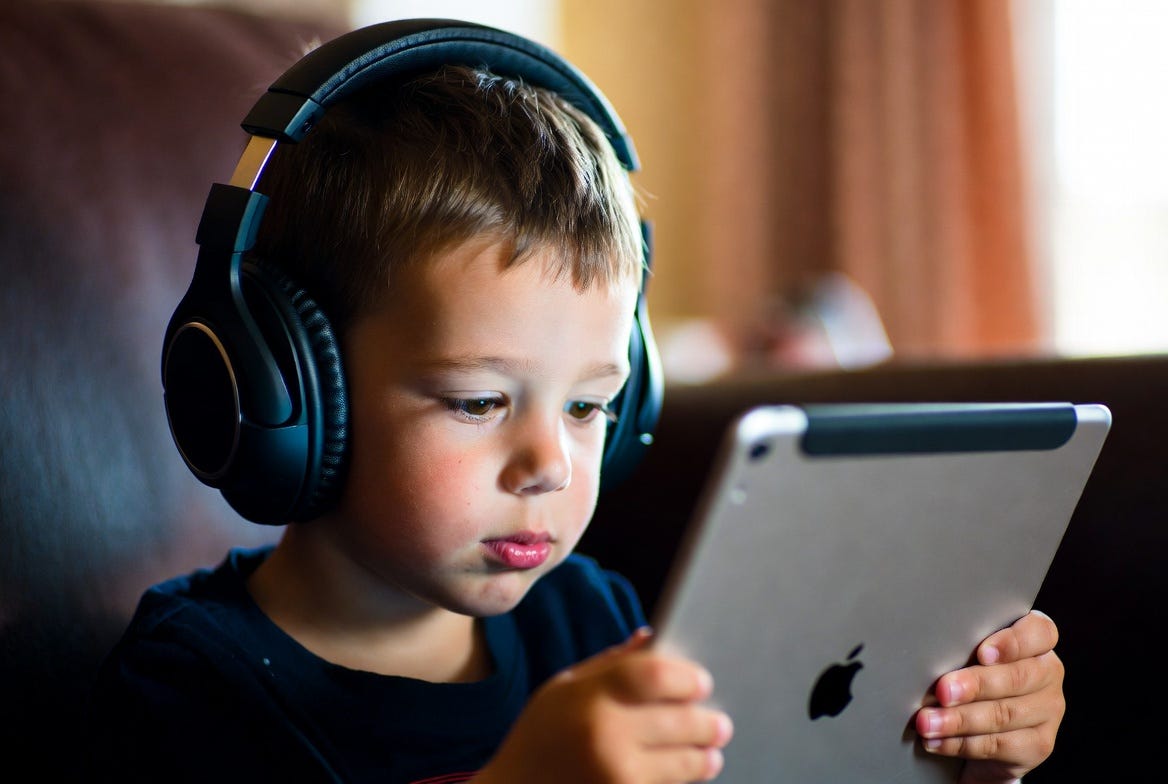
Functionally, it makes sense in the context of the portable, personal screen, which is the smartphone and its larger tablet brethren. Most people use devices to waste time, and to an outside observer it appears that the screen commands the person. To a parent, it makes sense to limit or eliminate such an activity because it appears to make children into zombies. At the same time, I was keenly aware around 2010 that the mini-screen was increasingly used as a kind of neural pacifier by parents. You give the kid a phone, and he stops demanding your attention for a while. You can eat in peace!
The problem with the term and how it maps to a concept is that it treats all screens as interchangeable and all activities accessed through a visual display as interchangeable. You can read a book on your phone, and that’s a profoundly different experience than doomscrolling Twitter, which is also different from watching a stream of shorts, which is different than watching a theology lecture on YouTube, etc. The way you use a TV is different than how you use a phone, a handheld console, or a PC monitor. They use similar technologies and may look very similar, but the experiences are very different.
Would you limit your kid’s “screen time” if he was sitting at his PC programming an app for a school project? What about playing World of Warcraft? What about making a mod for a game?
Would you turn off Citizen Kane halfway through the movie because you limit screens to an hour per day?
“Screen time” conflates all activities or media consumption and levels them into one grey goo that the authority figure is hostile or indifferent toward. What rankles me about screen time discussions is that it becomes apparent that parents are thoroughly uninterested in what their children are doing and don’t want to attend to it. It’s merely a screen, a potentially addictive and harmful thing that nevertheless the kid wants, so you limit it just like candy.
What occurs to me more recently is that this is the normal operating software for most people. My parents didn’t really care what I watched on TV back in the 1990s or what I did on the computer. They thought it better that I do something else. They instinctively disliked video games but spent their own free time watching TV. This, I gather, was a typical parental interaction for my generation. Screen time is just the next iteration for the next generation.
I think most normies approach media in similar ways. TV is a time-waster, and so is TikTok. The screen is a portal to distractions, not deep, meaningful experiences. Music is background noise. Phones fill the void.
But of course, it doesn’t have to be this way. There are video game experiences so much deeper and more involved than Candy Crush that make you really think or really feel. The difference between a great PC or console game and a phone idler is so vast they might as well not be considered the same medium at all. The same goes for shorts, “long form” videos, podcasts, and real films.
What we really ought to be concerned with as parents is what kinds of things our children are doing, not merely what technology is involved in those things. Screens can move us, inform us, enlighten us – but it matters what is on them.
If you are wanting some practical anecdotes, we always avoided giving our children phones or anything else in restaurants and short car rides when they were little. We carried in a bag of small toys that they could play with at the table instead. Yes, they wanted to play with us, and that meant not having a conversation as if they weren’t there, but that was a good thing. My children learned to handle restaurants, even my daughter who was a Covid baby. We let them watch movies on long car rides or flights—not exactly the same thing as putting on Cocomelon and hoping they zonk out while you have grown-up talk.
My kids also enjoy games, and there is something I noticed: the TV is different from a handheld. There is something strangely unsettling about a kid with a screen close to his face – it’s too focused, too close to the eyes, and makes him or her unaware of their surroundings. I still have these things, but if my kids want to play a game, I usually make them use the TV if they are at home. They get naturally bored of games, too, and inevitably stop playing them and doing physical activities without me having to negotiate and enforce some limit on “screen time.” If I want them to stop playing a game because I think they’ve done too much of it for the day, there’s never any drama about turning it off and finding a new activity.
I’m aware, saying this, that not everybody is the same. Some kids are really too interested in games or TV, or are uninterested in the deeper experiences technology can offer up. My main issue is that our terminology compresses a large set of concepts into one “bad” one, just as the focus on “reading” as a commendable activity compresses a diverse set of works into a single “good” activity when many, if not most, books are not challenging or enlightening and may, like certain romance books, be harmful. A trip back in time reveals that there were social panics about reading novels in past centuries and reading comics in the 20th century. It is easy to dismiss these concerns, but that is largely because most people have moved on from intense consumption of these goods. A subtle reading will note that many of our current concerns regarding the results of consumption are the same, such as wasting time, reducing the strength of social bonds, loss of morals, and the neglect of one’s duties.
It really matters what we do, not just how much we do it.
I am an independent artist and musician. You can get my books by joining my Patreon, and you can listen to my current music on YouTube or buy my albums at BandCamp.

Good post. It's nice to know I'm not alone in understanding not all screens are the same.
I upgraded to a flip phone because a smart phone was too much dopamine and damaging mentally [most critically creatively].
It's really saddening to see my peers do everything with a phone in hand. To sit or walk or wait around without entertaining yourself with your phone is a lost art. You could do anything and no one will notice you because they're too buried in their phones. It's crazy.
I know when I eventually have kids, it'll be a challenge to instill screen discipline in them. Tho I'll try to get them hooked on the positive uses of screen time rather than the negative.
Same here, 100%, and when I mention this, it's always thoroughly ignored. Four legs good and all that.